
Every family business has a story about how it began. A workshop that grew into a factory. A product that found its way into markets beyond its hometown. A decision, sometimes made out of necessity, that changed the course of an enterprise.
For the next generation, these stories are both a starting point and a responsibility. There is something to preserve, but also something to prove. The challenge is to understand what previous generations built and imagine what it could become.
In Delhi, Ahil Khan grew up around bags and suitcases. In Ludhiana, Punjab, Inderpreet Singh's childhood unfolded among bicycle frames, wheels and tools. And in Indore, Madhya Pradesh, Ayush Jain watched his family turn a rented house into a manufacturing unit.
Today, all three are finding their own ways to carry those beginnings forward. And increasingly, their ambitions are taking them beyond the markets their families once knew.
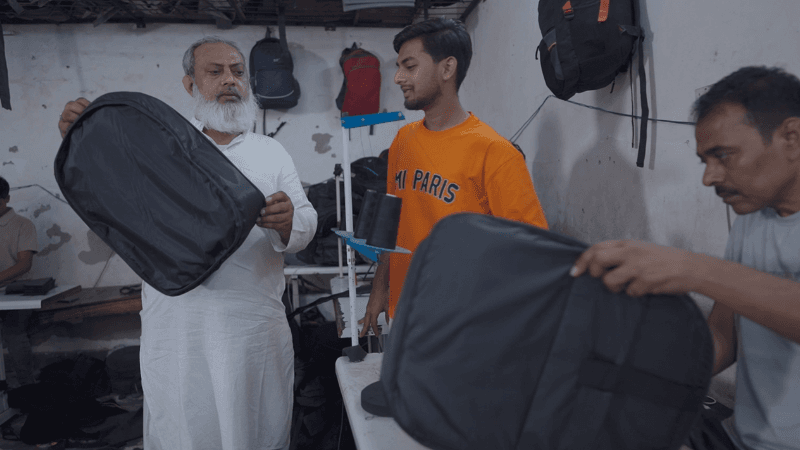
Image: Ahil with his father at their warehouse, inspecting the quality of the bags in production.
Long before Ahil Khan began thinking about online orders and warehouses, his family had been making suitcases by hand in Delhi. His grandfather had moved to the city from Bihar in the 1980s and started a business manufacturing and selling suitcases in local markets. His father eventually took it further, expanding into bags and backpacks.
Ahil’s own entry came at a time when the family was navigating considerable uncertainty. During the pandemic, with financial pressures mounting, he began taking on a larger role. He had just finished Class 12 and was already thinking about where the next opportunity might lie.
Some of his relatives were selling products online. He began observing how they operated, speaking to their account managers and learning the mechanics of e-commerce. Soon, he decided to try it himself, initially registering the online account on Flipkart under his mother's name.
The first month brought 40–50 orders. It was a small beginning but the numbers kept growing. Today, the business averages 600–700 orders a day, generates approximately ₹7–8 crore in annual revenue and employs close to 100 people.
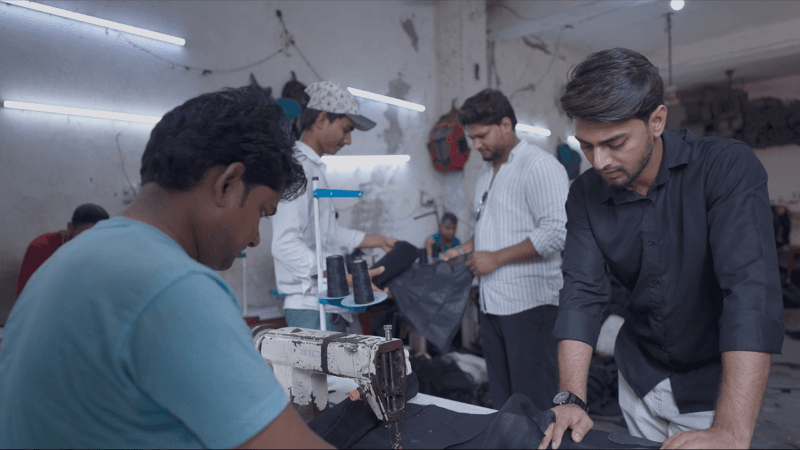
Image: Ahil collaborating with the tailor to ensure a seamless fabric fit for the bag.
What began with around 15 machines has expanded to 50–60 machines across in-house and outsourced production. The business now operates warehouses in different parts of the country.
As orders increased, inventory, production timelines and capacity became central to Ahil's thinking. He has also begun looking at electronics, including watches, earbuds and smart bands, as possible new categories.
As Ahil puts it, “I want to take it much further. That is how I think about growth now – not as maintaining what exists, but as constantly asking what comes next.”
His father expanded what the family made. Ahil has expanded where and how it sells, and is looking at what it could become next.
Inderpreet Singh: Finding his own direction on familiar ground
In Ludhiana, Punjab, bicycles are difficult to separate from the city's identity. They are part of its industrial history, its manufacturing floors and the businesses that have grown around them. For Inderpreet Singh, they were also part of growing up.
His father established the family business in 2011, beginning with tricycles for toddlers. Owing to competition, the family shifted to bicycle frames and eventually full-sized bicycles for wholesalers across the country.
Inderpreet had little doubt about where he wanted to be. While a conventional job was an option, he knew he wanted to work in the family business. But he was also looking beyond its existing markets. Noticing more customers turning to online platforms to buy bicycles, he saw an opportunity to reach them directly.
With his family's support, he set up a separate manufacturing unit and joined Flipkart in 2025. That became Skyton Bikes.
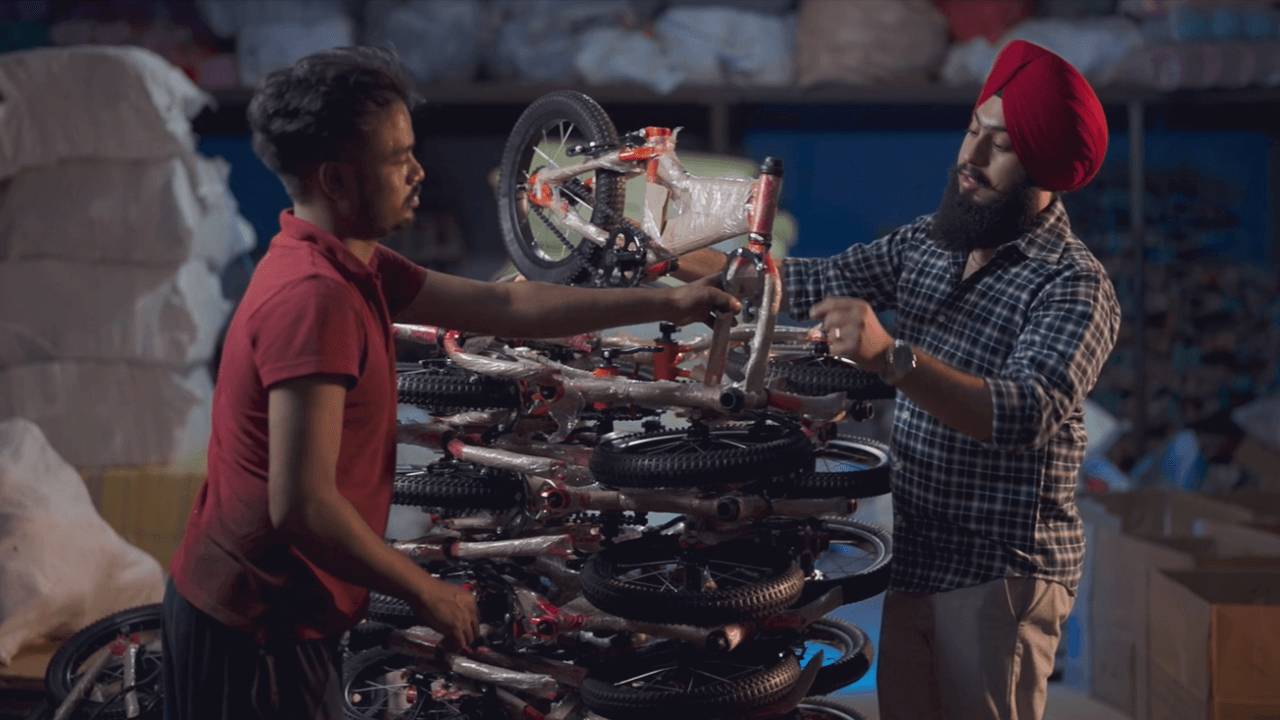
Image: Inderpreet and an employee inspecting the bikes on the production floor.
For Inderpreet, manufacturing is as much about creativity as it is about assembly. He focuses on bicycles for children aged two to seven. One of his favourite parts of the process is choosing the colours himself, researching trends and imagining how the finished bicycle will look when it reaches a child's doorstep.
That creative involvement is something he particularly enjoys. “The design and colors are my favorite part. I design them myself, choosing the colors and contrasts that will make each bicycle stand out.”
The first few months were quiet. Some days brought just one or two online orders. Then came his first Big Billion Days Sale in 2025. Orders crossed 100 a day throughout the sale, and the small team of fitters and packers found itself working to manage the demand.
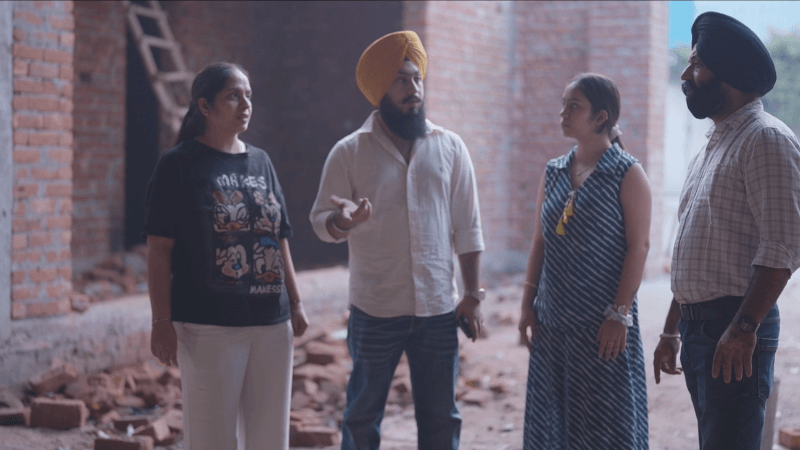
Image: Inderpreet and his family visiting the site of their new Skyton warehouse, currently under construction.
The experience gave him a clearer picture of what lies ahead. A third manufacturing unit is planned, and the family is preparing to introduce adult bicycles. His younger sister has also begun supporting the business by managing its Instagram page and learning digital marketing.
In the evenings, Inderpreet looks up bicycle dealers in other cities, finds their contact details and calls to introduce Skyton. It is a hands-on approach to building the brand's dealer network and taking it into markets beyond the ones the family has traditionally served.
The factory may be familiar ground, but Inderpreet is steadily finding new places for the business to go.
Ayush Jain: From a rented home to a growing brand
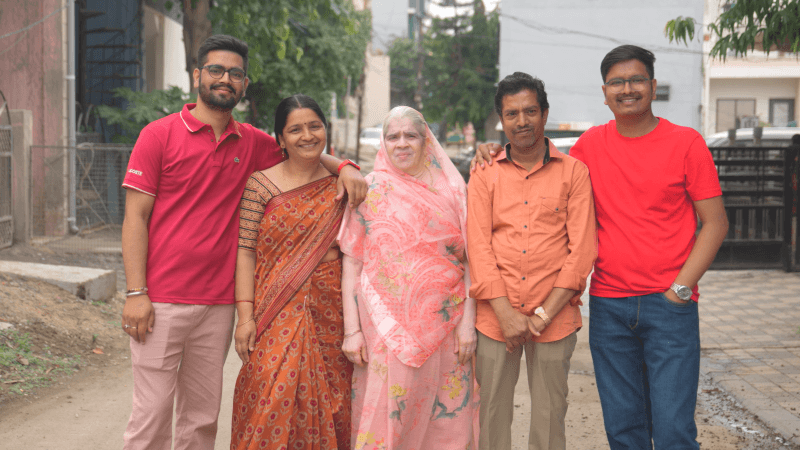
Image: Ayush Jain (far right) with his family in Indore, Madhya Pradesh.
In 2016, Ayush Jain’s family made a decision that would change the direction of their lives. His father closed the general store they had been running in Guna, Madhya Pradesh, and moved the family to Indore in search of a bigger opportunity.
Starting afresh in a new city, the family was still figuring out what that opportunity might look like. With little experience in manufacturing, they began learning from relatives who were already in the business
Their first manufacturing unit was the rented house they lived in.
They started making storage boxes, laundry boxes and garment covers. Over time, contract orders gave way to B2B business and white-label manufacturing. For nearly four years, the family worked together, gradually mastering a trade they had initially known little about.
By the time Ayush completed his B.Com, the business had established itself. He was encouraged to consider an MBA, but he wanted to join the family business and explore what else it could become.
In 2025, he launched Ghar Organize on Flipkart, taking the family's existing products beyond wholesale route and directly to consumers.
Reflecting on that decision, Ayush says, “Studying further was an option, but I felt the business had much more potential if I gave it my full attention. I wanted to do something other than the traditional wholesale route. Selling online gave us the chance to reach customers across India directly.”
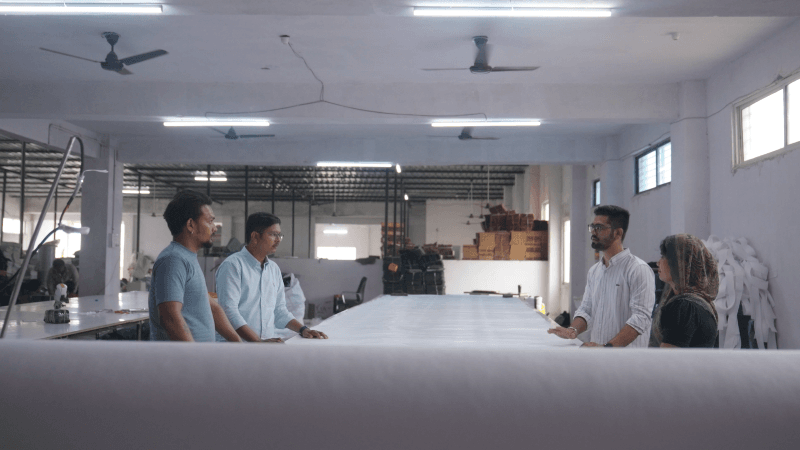
Image: Ayush and his brother Somil Jain at their production facility, reviewing materials with their employees.
Around 700 units were sold in the first month. Before long, daily orders reached 500. Within 11 months, the business had fulfilled more than 1.25 lakh orders.
But the increase in demand also called for a different way of working. Manufacturing every product themselves was becoming resource-intensive, so the family began working with dedicated vendors and distributing production across multiple facilities. Fabric came from Rajkot, some components from Delhi, and coordination across these locations became an important part of the operation.
The business grew, and so did the team. From an initial group of just 8–10 people, the operation now supports around 50 people across its facilities, approximately half of whom are women.
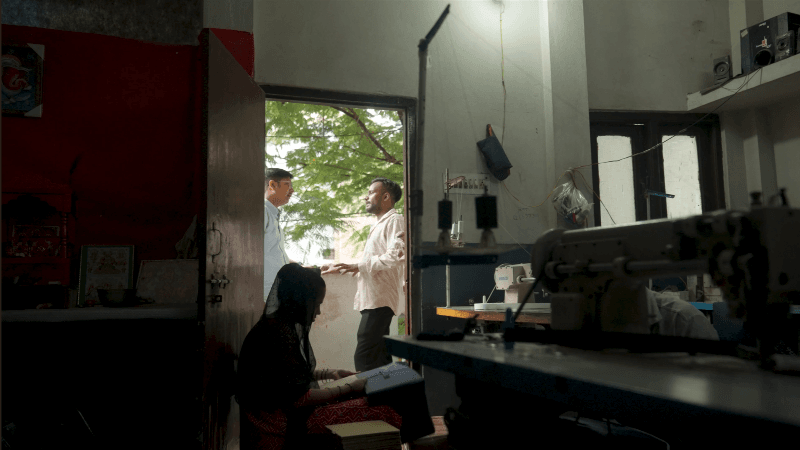
Image: Ayush on the ground at the manufacturing unit, working closely with a vendor to plan upcoming order volumes.
The transformation has been especially visible during the Big Billion Days Sale. “On a regular day, the business dispatched around 500 orders. During the sale, that number climbed to as high as 2,500 a day,” says Ayush.
For Ayush and his family, the business that once occupied a corner of their rented home now has customers across the country. And what began as a manufacturing operation for other businesses is becoming a brand that the family can call its own.
A new generation leading the way
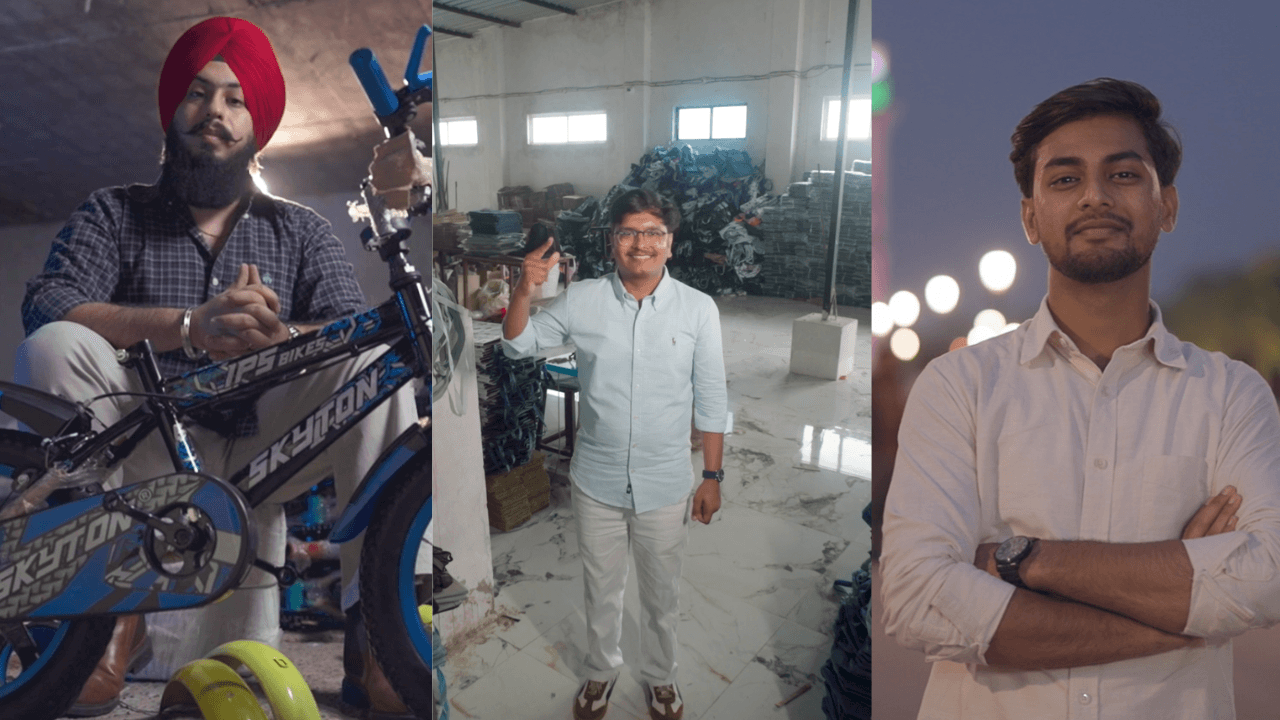
Image (From left to right): Inderpreet Singh, Ayush Jain and Ahil Khan.
Their families built the foundations. Ahil, Inderpreet and Ayush are now building what comes next.
For Ahil, it meant recognising that a manufacturing business could reach a much wider market online. For Inderpreet, it meant building a distinct bicycle brand while drawing on his family's experience. For Ayush, it meant taking years of manufacturing experience and turning it into a consumer-facing business.
E-commerce has been an important part of that journey, bringing customers, markets and possibilities within reach that might once have seemed distant. But the work of building a business still happens on the ground: in factories, through conversations with teams, in production decisions and in the everyday effort of getting orders out on time.
Their stories are still unfolding. Ahil is looking at new categories, Inderpreet is preparing to expand his bicycle range while Ayush is continuing to grow Ghar Organize. And in doing so, they are ensuring that these family businesses don't simply carry their histories forward, but have new stories of their own to tell.


