
What began as a handmade paper business became, for Shivani Srivastava, a larger mission centered on women, dignity, and steady income. Shivani grew up in Jalaun district in Bundelkhand, Uttar Pradesh, a region she describes as “a bit cut-off from the normal world.”
“Even in childhood, if something new happened, we would only hear about it from someone who came from outside,” she says. Opportunities were slow to arrive, and exposure was limited. She studied in Jalaun through eighth grade before moving to Jhansi in 2003 with her siblings to
continue her education. She graduated in 2012 and earned her Master of Social Work degree from Lucknow University.
For Shivani, this interest in empowering underserved groups was not a career choice. It was simply part of her upbringing. “My father founded Samarpan, an NGO focused on
women-centered community development, nearly 40 years ago. That environment shaped my worldview,” she says.
“As I had seen him run an NGO, I felt that I had a lens where I could see everything,” adds Shivani. “Community problems like awareness, livelihood, entitlements, education—I saw everything from a women-centric lens,” she explains. As of January 1, 2026, she officially stepped in as Director for the NGO.
How Handmade Paper Opened New Doors for Women in Jalaun
Located on the border of Uttar Pradesh and Madhya Pradesh, Jalaun is not known for a thriving industry. It sits in the Bundelkhand region, a place infamously hit by severe droughts. With dry earth and very little water, life is a struggle. "There is no work here except for farming," Shivani says of her hometown. Because the rains are so unreliable, most families survive only through daily labor or by mass distress migration.
While the men often leave for big cities to find jobs, the women stay behind.
After completing her master's degree, Shivani worked with the PHIA (Partnering Hope Into Action) Foundation on the Internet Saathi Program, supported by Google CSR and Tata Trust. She led the digital literacy initiative in Jalaun, teaching rural women how to use smartphones and access the internet.
“There was a big digital gender divide. Girls were less likely to use mobiles and the internet compared to boys,” she explains. During workshops, she noticed many women were watching YouTube videos to learn to make handicrafts products, and reuse waste materials creatively. This observation eventually turned into a business idea.
“The products were impressive, but they had no way to sell them. I knew I could help turn that skill into a livelihood,” Shivani explains. She didn't just stop at training. She built the infrastructure they needed—finding a physical space and launching an online store to bring their work to a national audience.
Recognizing that Jalaun’s traditional handmade paper was the district’s designated product under the "One District One Product" (ODOP) initiative, Shivani saw a golden opportunity to turn this local craft into a modern brand.
“Wasting no time, I opened a small store in Lucknow in 2018. Within six months, I registered as a seller on Flipkart. Around that time, I also leaned into the One District One Product (ODOP) initiative,” says Shivani.
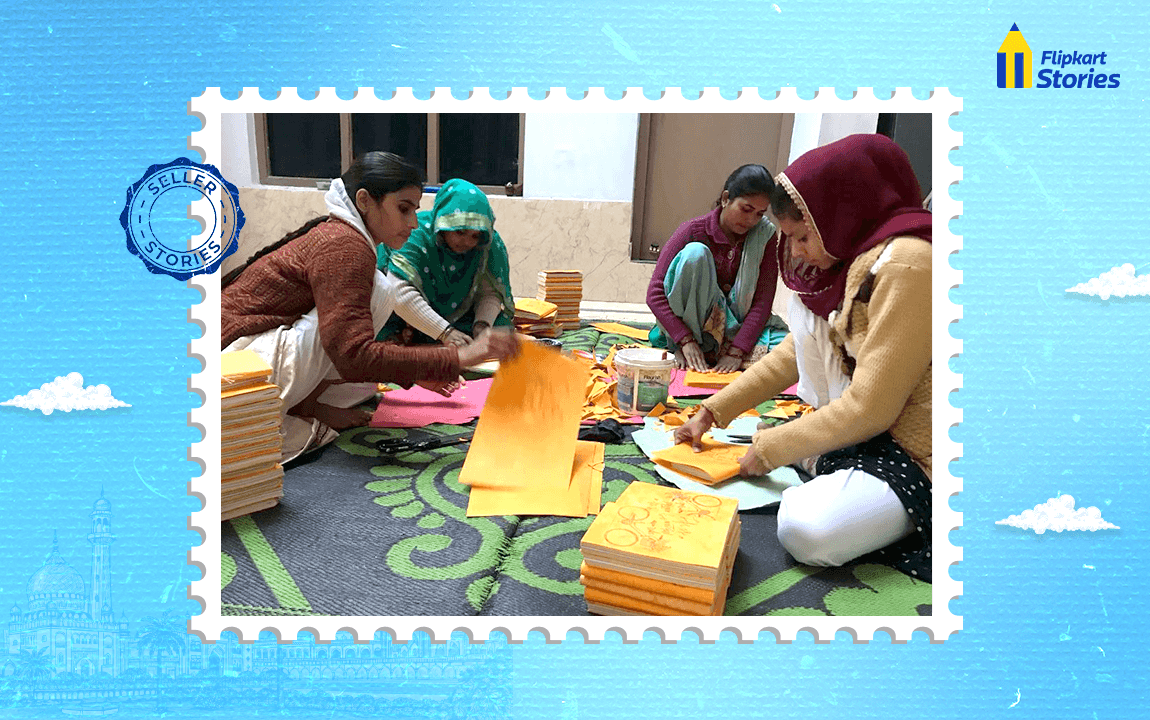
Through Cutrunn Creations, she began producing a range of premium handmade paper products, including diaries, notepads, envelopes, and paper bags. While she initially had to hire an outside trainer to build their skills from scratch, the initiative has now become self-sustaining. Today, veteran artisans within her cluster mentor every new joiner, passing down their expertise through a seamless, woman-to-woman training model.
From Street Plays to Gender Divide: Growing up in Bundelkhand
As a teenager, Shivani joined IPTA, the Indian People’s Theatre Association, performing street plays on social issues. “I started performing nukkad natak (street plays) at a young age. Back then, neighbors would show up at our door to complain, asking my parents why their daughter was out on the streets with boys,” she recalls.
When she learned to ride a scooter, it caused another stir. These small reactions shaped her understanding of gender expectations and discrimination early on. “I began to realize the stark difference in how boys and girls were treated,” she says.
Rather than letting these societal pressures shrink her world, Shivani used them as a catalyst, turning every judgmental whisper and raised eyebrow into the foundation for her mission to empower women.
Turning Familiar Skills into Sustainable Livelihoods
Shivani’s home doubles up as both an NGO office and a production unit. Around 20 women are associated with the initiative, with seven working regularly and others joining during peak demand. Together, these women create 200 to 300 products per day.
Most of these women previously worked as agricultural laborers, which was both seasonal and physically demanding. “They would pluck peas all day and get only around ₹200,” Shivani says. Now, a woman making 30 to 40 diaries in a day earns ₹20 per diary – which comes to ₹600 to ₹800 daily. “It is steady work,” she says. “They can manage it alongside their homes.”
Shivani believes skill development only works when it aligns with what women already know. “I want to expand to more products and bring in more work for women in the community. But if we bring something outside of their skillset, they don’t like it. Sewing is everyone’s comfort zone so we ensure products fall into this category of crafts,” she explains.
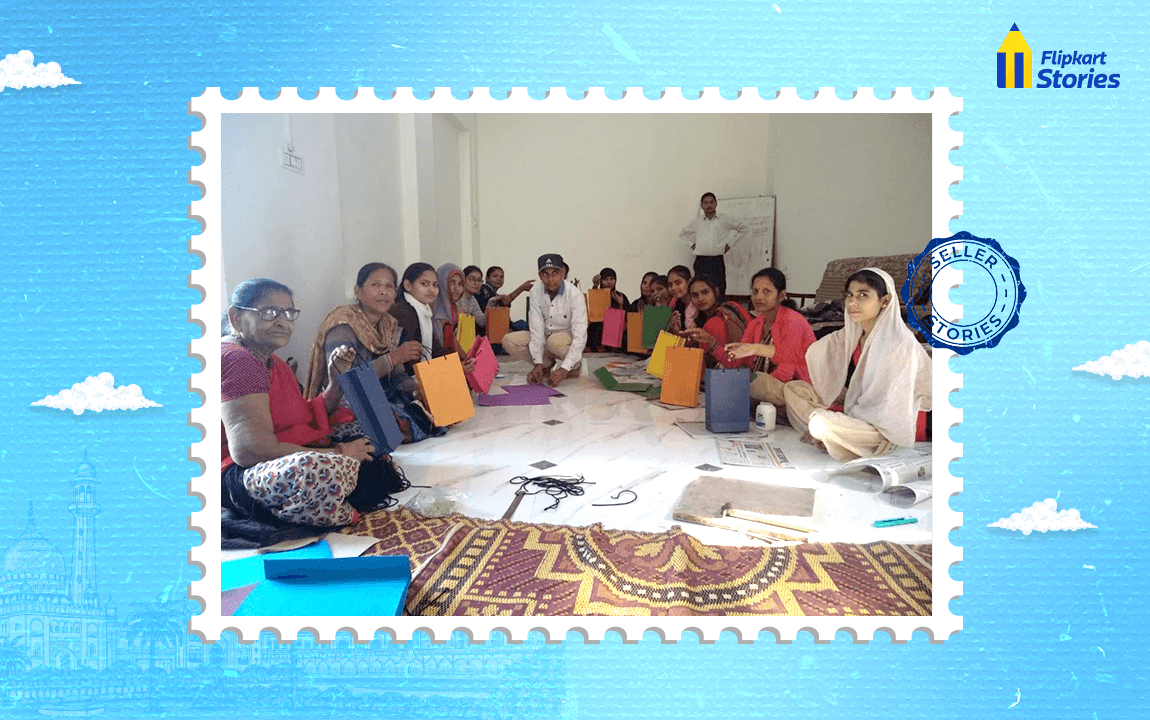
Her team of artisans already make canvas bags. Shivani now plans to open a sewing center to expand into a sustainable event decor. “People are moving toward eco-friendly decoration. We want to supply cloth banners, textile decorations, and reusable alternatives for disposable materials for events,” she says.
For Shivani and her team, sustainability is not a buzzword — from a strip of paper to canvas and evening packing, nothing goes to waste as they follow a zero waste approach. “We reuse the dried grass that comes with incoming supply shipments to package outgoing products,” she adds.
Building Market Access Without Leaving Home Behind
Over time, Cutrunn Creations’s physical store has expanded beyond their handmade paper products to include products from nearly 12 districts under the ODOP initiative. Shivani connects with artisans through exhibitions and government fairs, building direct relationships. Her offline store in Lucknow acts as a central hub for storage and shipping.
Flipkart remains one of the key online platforms where her handmade paper products are listed. “We started with Flipkart, and its listing process felt very easy to me. I believe it is the best option for beginners because it has the easiest registration process.
The website and seller portal are also easy for us to use. I came to know about the Samarth program only later. Today, the Samarth team supports us with guidance on advertisements, pricing, and more,” she says.
Transforming Her Community Beyond the Business
Shivani’s lens on empowerment extends far beyond generating income. Through her NGO, she works with 200 adolescents across seven villages, mentoring them to become leaders in their own communities.
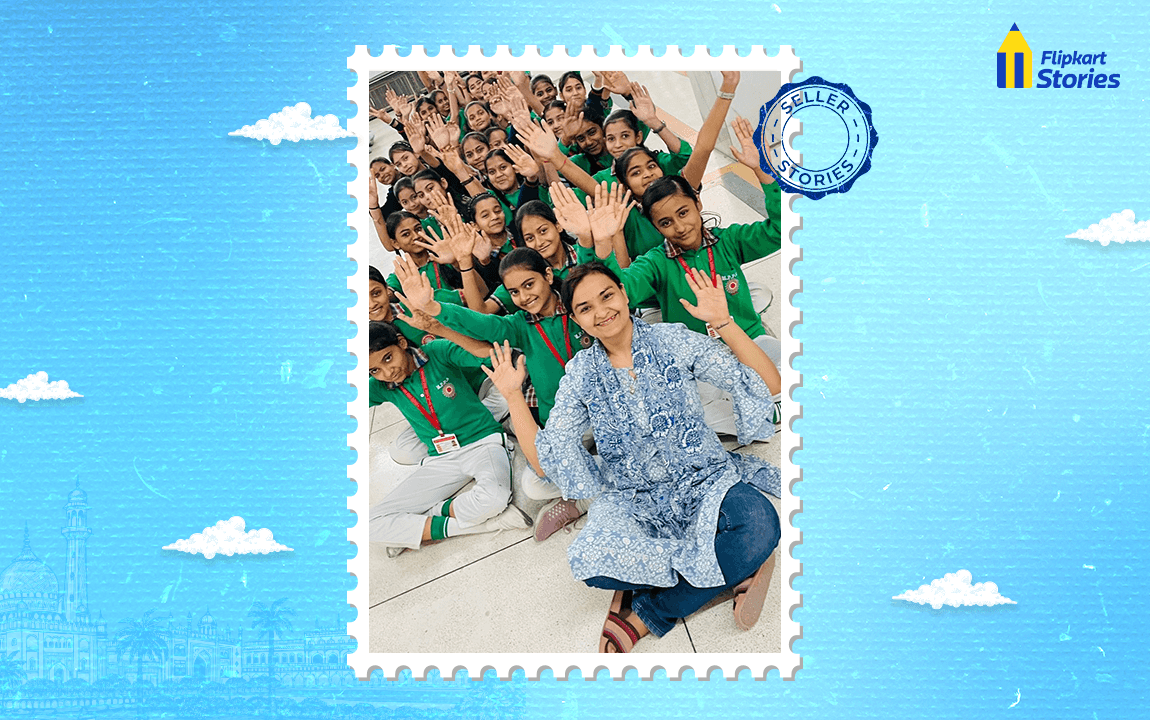
A powerful example of this occurred when a broken, mud-soaked road began preventing a local girl from even walking or cycling to school. Rather than simply complaining, Shivani mentored the student to take civic action. “I helped her write a heartfelt letter to the Sub-Divisional Magistrate (SDM), a woman around my age,” Shivani says. In the letter, the girl shared her dream of becoming an officer like the SDM one day, but explained that the road was an insurmountable barrier to her education.
The appeal struck a chord. The SDM immediately sanctioned ₹50 lakh for the project, and today, the road is under construction.
“Our youth programs are all about making them active citizens,” she says emphatically. “We want them to reach a point where they can identify their own problems and find their own solutions.”


