The Flipkart Foundation recently hosted Sampark 2026, its fourth annual flagship conference, at Bharat Mandapam, New Delhi. Building on last year’s conversation on community strengthening, this year's theme — Systemic Change: Building for Lasting Impact — asked a core question: how do we strengthen the systems, institutions and partnerships that help change endure long after a program ends? The day brought together policymakers, civil society leaders, Foundation partners, beneficiaries and community members for meaningful conversations, debate and recognition.
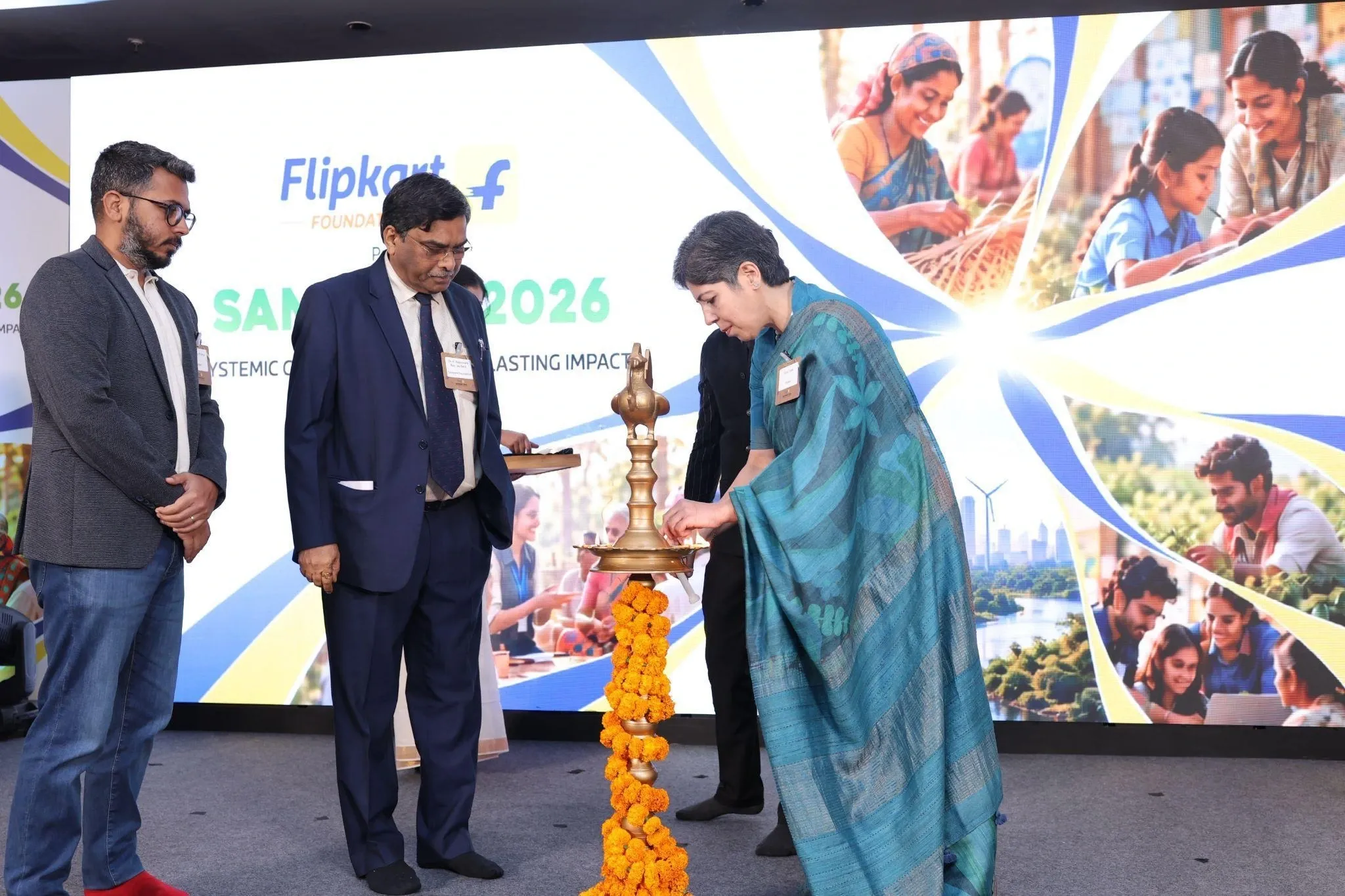
Lighting of the lamp — From left to right: Digbijay Mishra, Vice President, Communications, Flipkart Group; Dr K. Rajeswara Rao, IAS (Retd.), President, Sampark Foundation; and Puja Trisal, Senior Director, Flipkart Foundation, light the ceremonial lamp to open Sampark 2026.
Four Years. Four Million Lives.
Addressing the audience, Rajneesh Kumar, Chief Corporate Affairs Officer, Flipkart Group, and Board Member, Flipkart Foundation, reflected on the Foundation's journey. In four years, it has reached over 4 million people across India, working with 21 partner organisations, with an ambition to touch 20 million lives by 2032.
“Numbers alone cannot tell us whether we are making a real difference,” he said. “We often ask ourselves, what has changed in people’s lives? Will this change last?” He also announced the upcoming Flipkart Foundation Social Impact Awards, which will recognise promising grassroots solutions.
Stories of Change
The stories that followed showed what that change looks like on the ground. Aashmi Goyal, a scholarship recipient through Buddy4Study India Foundation, shared how she cleared NEET and joined SMS Medical College, Jaipur, months after losing her father. The Flipkart Foundation scholarship, she said, gave her family “peace of mind” — while a mentorship with Nishant Gupta, Head of Sustainability, Flipkart Group, helped her find her voice.
Sanjeev Dham, Executive Director, Smile Foundation, spoke about the BFSI skilling program across Hyderabad and Bengaluru. “Women make up nearly 73% of trained youth, and a year after placement, 71% of placed candidates remain employed. Sustainable employment is not just about helping someone secure a job,” he said, “but ensuring they are able to retain it and build a stable future.”
From Beneficiaries to Stakeholders
Delivering the keynote address, Dr K. Rajeswara Rao, IAS (Retd.), President, Sampark Foundation, drew on over three decades in public service to trace a shift in how development works — from treating communities as beneficiaries to engaging them as participants and stakeholders. “If you depend on individuals, then perhaps you cannot continue for a long time,” he said. “It has to be institutional practices.” He urged partners to make community consultation genuine and sincere, to hold themselves accountable for measurable impact — and to share failures as openly as successes. “Why should only success be celebrated?” he asked. “Failure also should be celebrated,” he said, adding that failures offer learnings that contribute to future success.
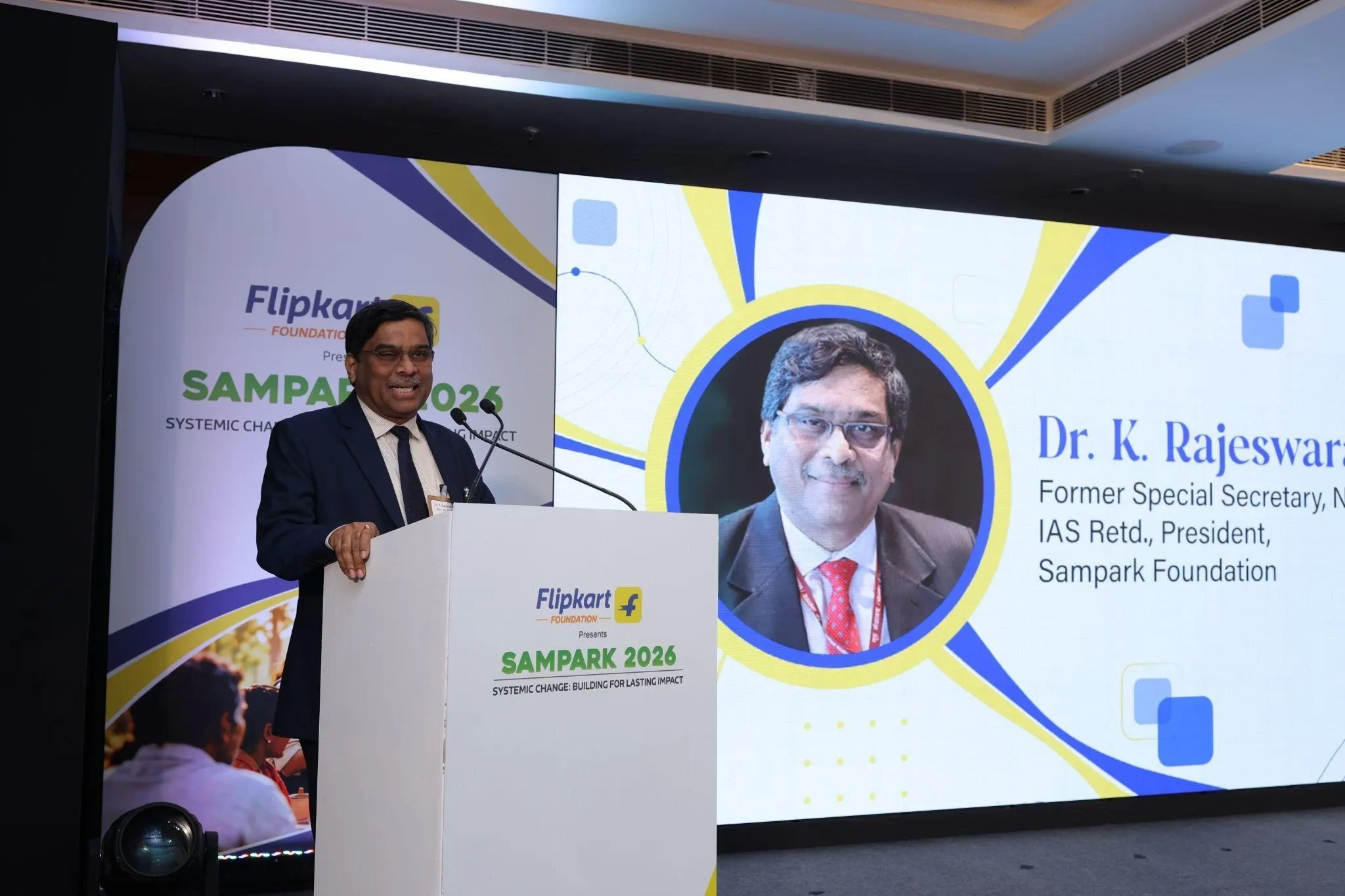
Dr K. Rajeswara Rao, IAS (Retd.), President, Sampark Foundation, delivers the keynote address
Beyond Projects
The panel discussion - Beyond Projects – What Does Systemic Change Really Look Like? - moderated by Aman Pannu, President, DCM Shriram Foundation and Head of Corporate Communications & CSR, DCM Shriram Ltd, brought together Shabnam Sinha, Independent Director and former Lead Specialist, World Bank; Sourav Banerjee, Vice President, Room to Read Global and Vinod Raghuwanshi, Co-Founder & CTO, Leap 300. The discussion explored scaling successful interventions through government ownership, stronger institutions and collaboration, while adapting solutions to local needs. It also highlighted the importance of supporting women's entrepreneurship and building inclusive, sustainable development models.
Framing the discussion, Aman Pannu said that with philanthropy making up only a small share of development funding, the role of foundations and NGOs is to build “lighthouse models” that the government can take to scale.
Shabnam Sinha called for convergence with government systems, so that NGOs can multiply the impact of public spending rather than build parallel structures. Sourav Banerjee of Room to Read emphasised that what scales is not a model but the principles behind it — and that co-designing with the government creates the change in ownership needed. “You cannot scale up a model because your model is designed for 20 schools,” he said. Vinod Raghuwanshi of Leap 300 highlighted how voice-led and AI tools can give participants agency and help frontline staff deliver better advice at scale.
Global; Vinod Raghuwanshi, Co-Founder & CTO, Leap 300; and Puja Trisal, Senior Director, Flipkart Foundation, after the panel discussion on systemic change.
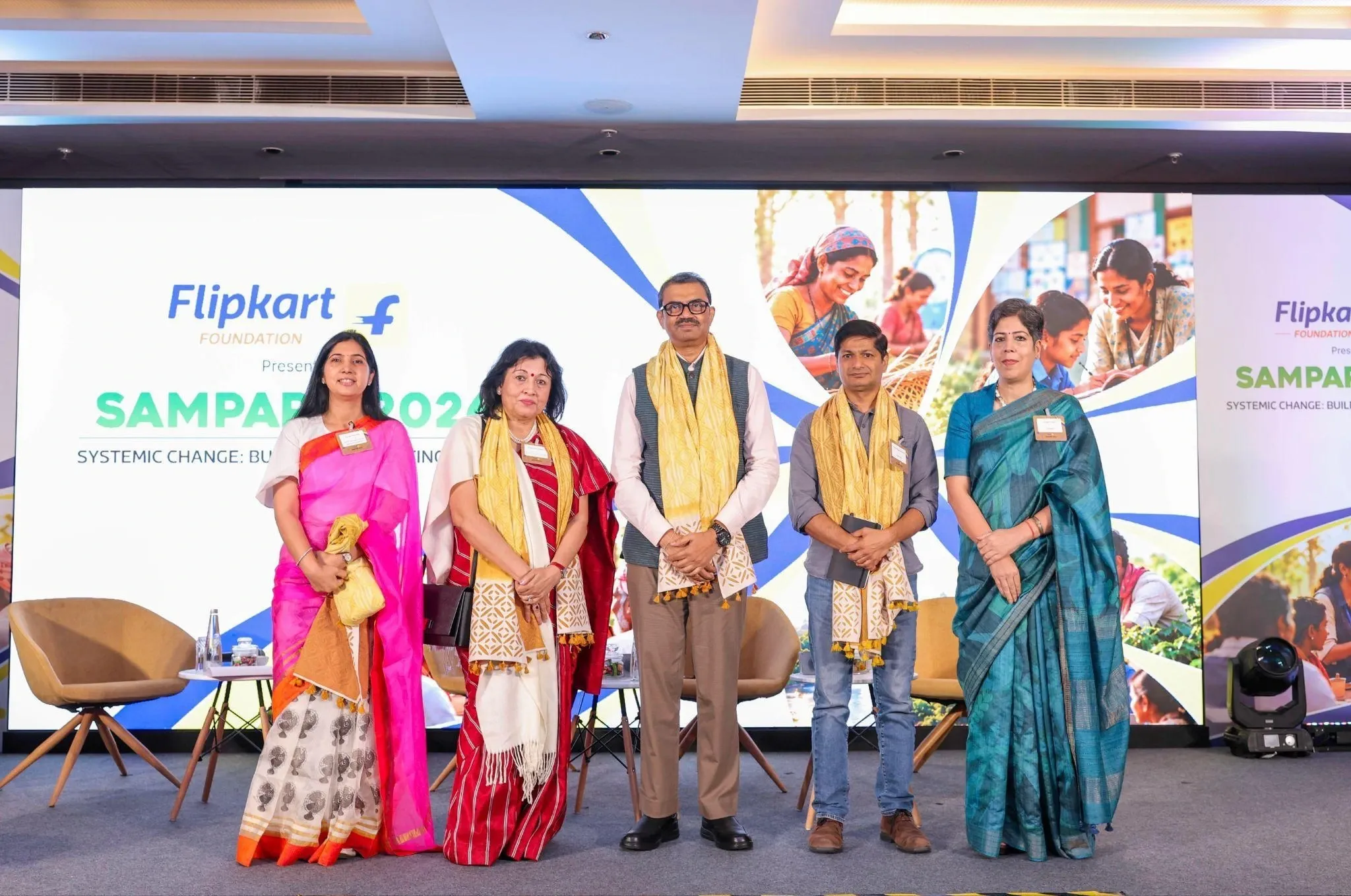
From left to right: Aman Pannu, President, DCM Shriram Foundation (Moderator); Shabnam Sinha, Independent Director and former Lead Specialist, World Bank; Sourav Banerjee, Vice President, Room to Read Global; Vinod Raghuwanshi, Co-Founder & CTO, Leap 300; and Puja Trisal, Senior Director, Flipkart Foundation, after the panel discussion on systemic change.
Building Partnerships with Government
Shri Madhur Verma, IPS, Joint Commissioner of Police (Central Range), Delhi Police, spoke about where corporates and NGOs can help bridge the “last mile” — particularly in engaging school dropouts at risk of juvenile crime through sport, education and skilling.
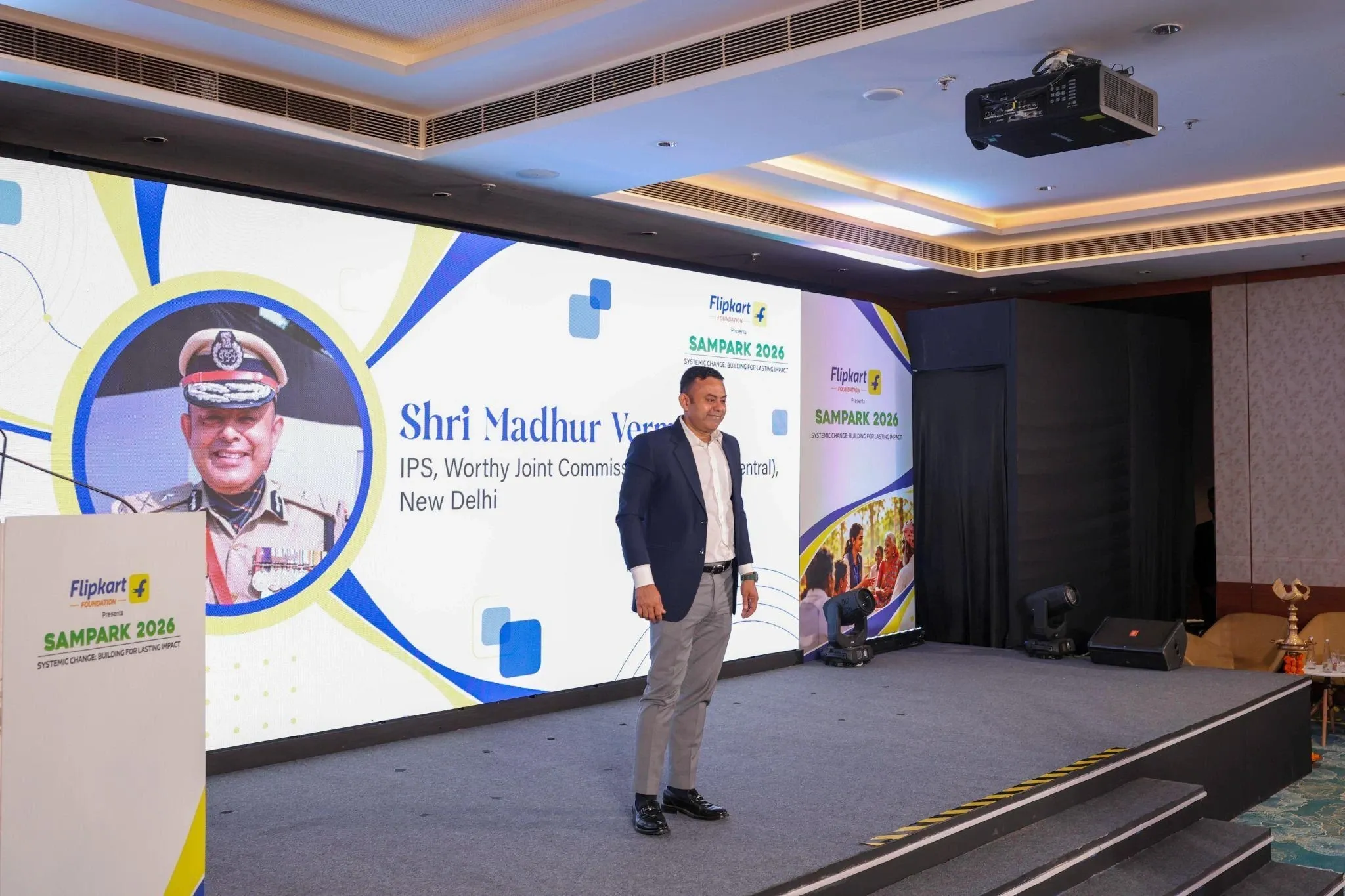
Shri Madhur Verma, IPS, Joint Commissioner of Police (Central Range), Delhi Police, addresses the gathering.
Delivering the Special Address, Chief Guest Shri Kapil Mishra, Hon'ble Cabinet Minister of Law & Justice, Labour, Employment, Development, Art, Culture & Language and Tourism, Government of NCT of Delhi, said, “Ensuring the welfare and security of gig workers requires a concerted effort by the government, industry and all stakeholders. The Delhi Government is working towards establishing a Gig Workers Welfare Board to strengthen social security, healthcare and workplace safety, while also addressing the needs of workers and their families.
We must also look beyond immediate welfare and create opportunities for skill development and career progression, enabling delivery partners to move into roles across store, warehouse and inventory management. Through closer collaboration with industry, we can build stronger support systems and help gig workers and their families access more secure and sustainable livelihoods.”
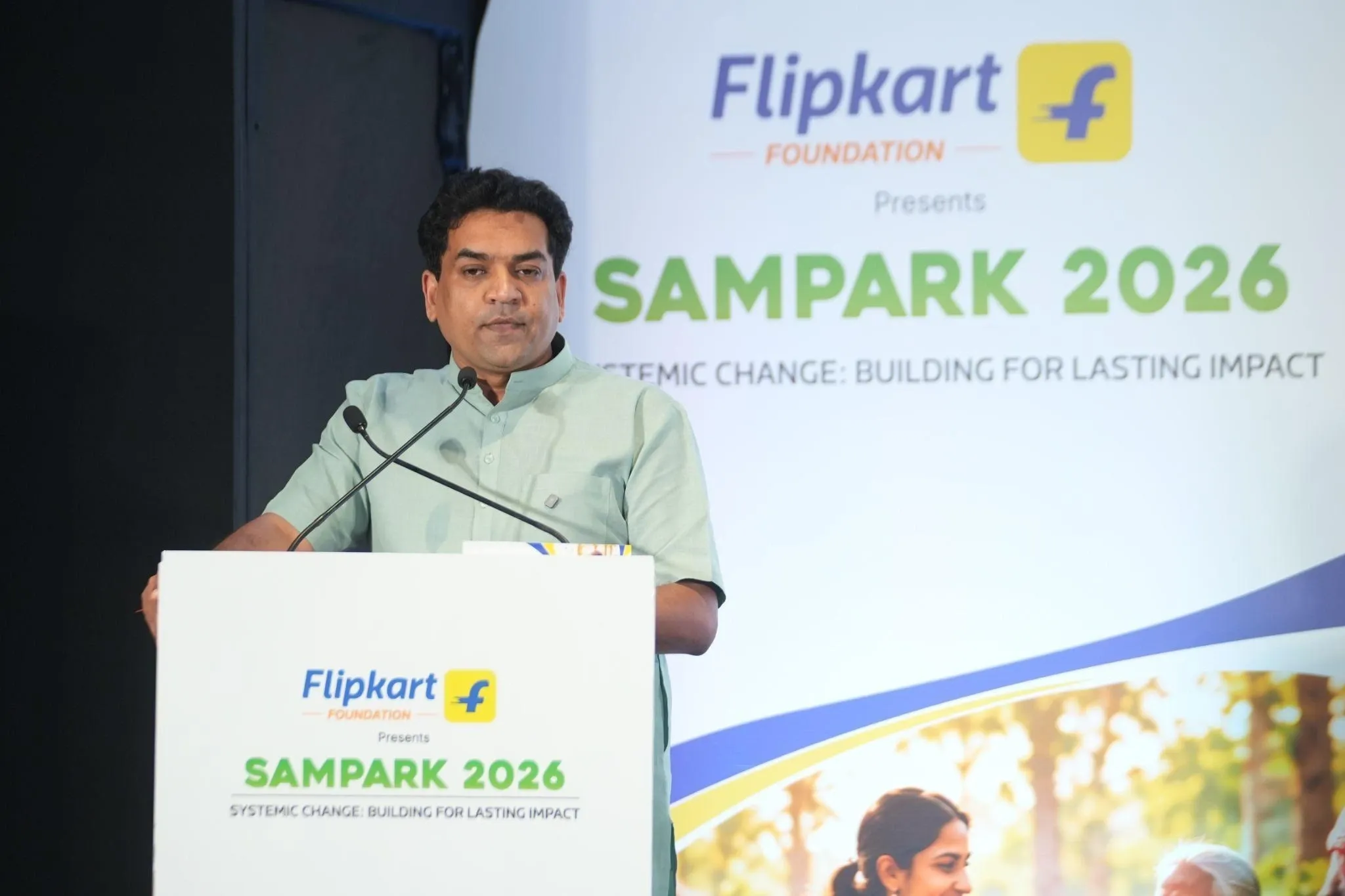
Shri Kapil Mishra delivers the Special Address at Sampark 2026.
The Flipkart Foundation then unveiled its Overview Document FY 2025–26, capturing the milestones and impact of the past year.
Institutions, Not Just Programs
In a fireside chat moderated by Digbijay Mishra, Vice President, Communications, Flipkart Group, Shaveta Sharma Kukreja, Trustee and Advisory Board Member, Central Square Foundation, and Abhishek Gupta, Chief Operating Officer, YuWaah (Generation Unlimited India), UNICEF, explored how impact can outlast the programs that create it.
Shaveta Sharma Kukreja described the shift from “band-aid solutions” to strengthening institutions from within. The test, she said, is simple: if an NGO steps away, does the system fall back to where it was? The government, she added, must be at the table “from day one” — as a partner, not just as an approver. Abhishek Gupta stressed the need for a shared theory of change and acknowledged that collaboration is messy — but those who stay the course go further than those who work alone.
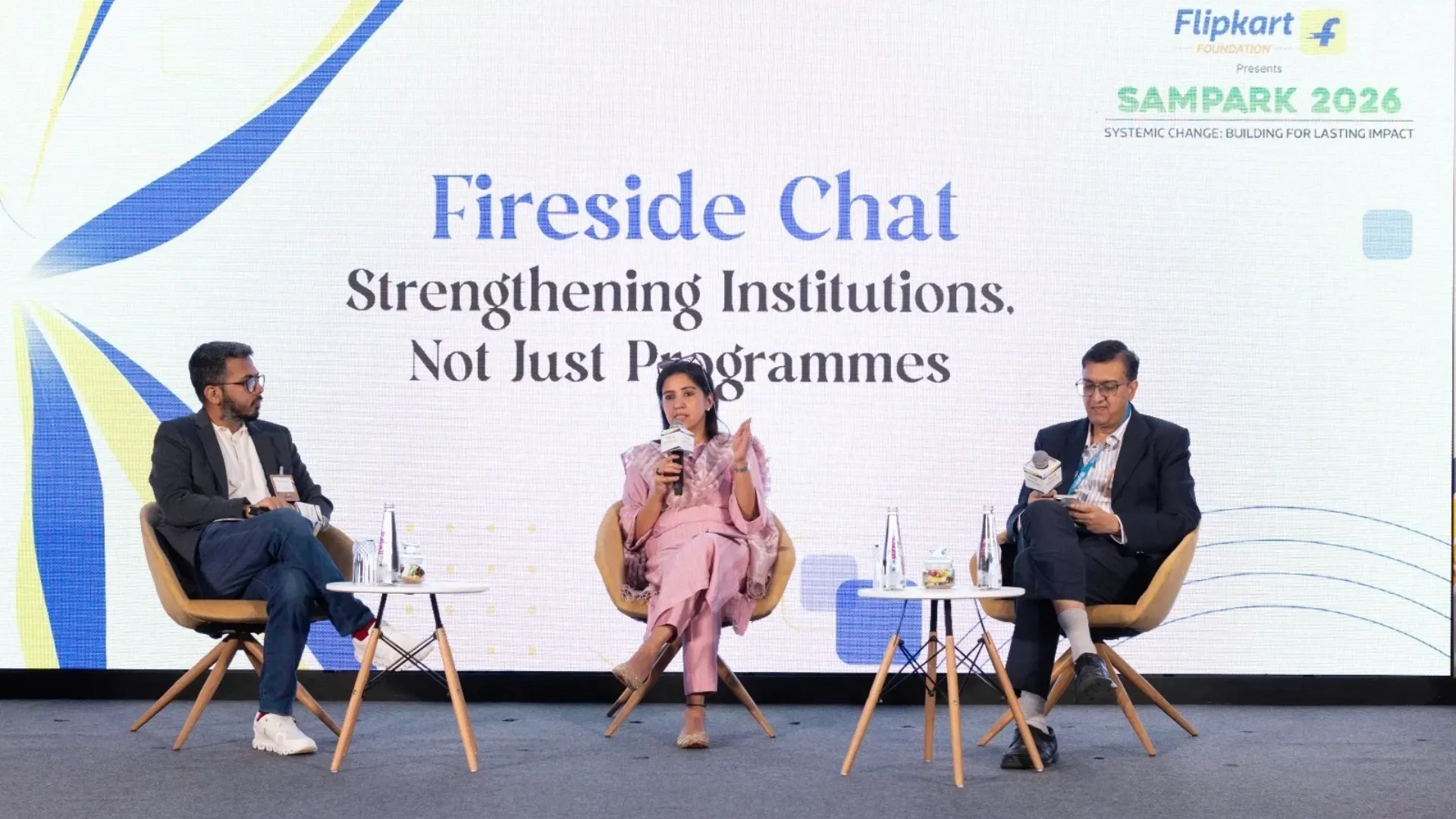
From left to right: Digbijay Mishra, Vice President, Communications, Flipkart Group; Shaveta Sharma Kukreja, Trustee and Advisory Board Member, Central Square Foundation; and Abhishek Gupta, Chief Operating Officer, YuWaah (Generation Unlimited India), UNICEF, in a fireside chat on strengthening institutions.
Celebrating Our Sampark Saathis
The closing session recognized the partners who bring the Foundation’s vision to life. Introducing the Sampark Saathi Awards, Yogita Shanbhag, Vice President, Human Resources, Flipkart, noted that “lasting change cannot be achieved through individual efforts alone.” Puja Trisal, Senior Director, Flipkart Foundation, then felicitated:
● AIACA — supporting women artisans in Tharad, Gujarat.
● Buddy4Study India Foundation — offering merit-cum-means scholarships for undergraduate STEM education.
● Pratham InfoTech Foundation — for digital literacy and 21st-century skills.
● Smile Foundation — offering BFSI skilling, with over 70% women participants.
● SM Sehgal Foundation — for environmental awareness across 40 villages in Kaithal and Kurukshetra, Haryana.
● SOS Children's Villages of India — offering family-based care for 62 children across Delhi, Kolkata, Varanasi and Bengaluru.
● The Akshaya Patra Foundation — offering nutrition program.
● WWF India — the Vasundhara Mitra program, building eco-conscious citizens across 4,500 schools in Maharashtra.
Looking Ahead
Closing the day with the vote of thanks, Puja Trisal reminded the room that what was discussed matters less than what happens next. “Will our conversations translate into collaborations? Will our ideas convert into initiatives?” she asked. “That's where the success and beauty of Sampark lies.”
As the Flipkart Foundation enters its fifth year, the focus is clear: going deeper, not just wider — together.