
The Flipkart Group continues to drive green transformation in India’s dynamic e-commerce ecosystem, and the Sustainability Action Summit 2025 marked a key milestone in this journey. The summit stands as a powerful platform accelerating India’s journey towards circularity, decarbonization, and truly sustainable commerce.
Bringing together policymakers, industry leaders, innovators, and partners, the summit unites various stakeholders driven by the shared mission to create impactful environmental outcomes.
Nishant Gupta, Head of Sustainability at Flipkart Group, emphasized the essential role of these stakeholders, stating, “We are all professionals working in this space or can possibly meaningfully contribute to this space directly. But we are also the ambassadors of sustainability, and that is the biggest role that we all play in our companies.
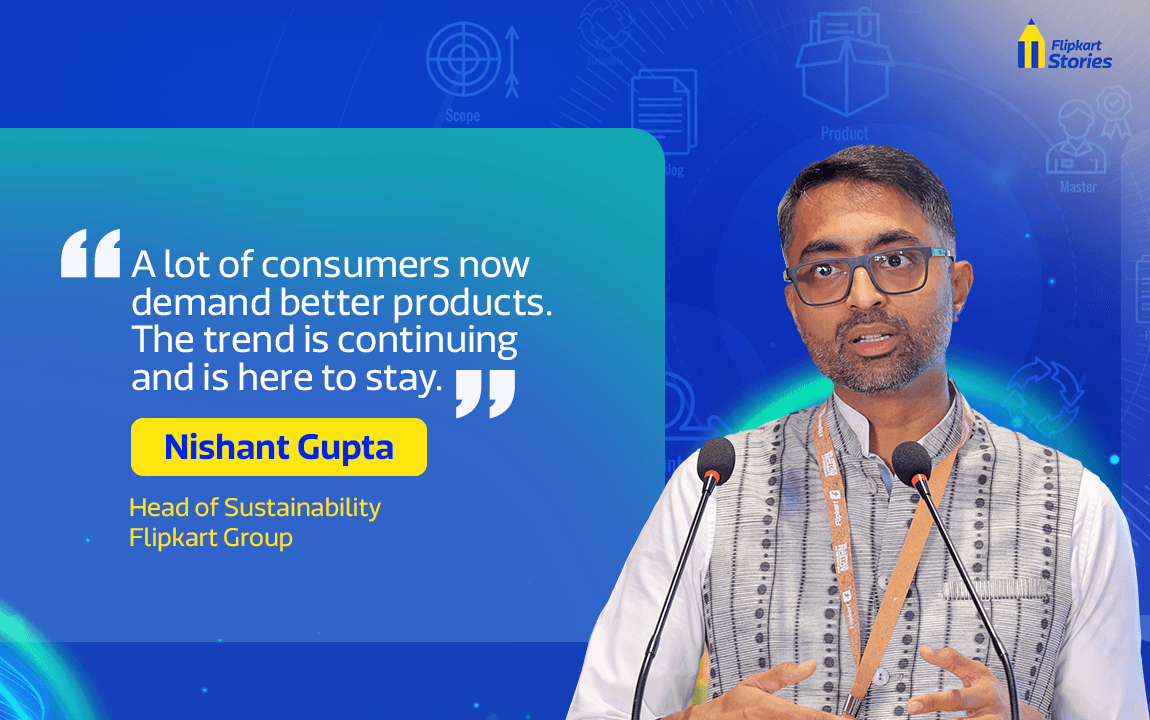
We are the ambassadors of change in our organizations ensuring that we collaborate within and outside to take meaningful steps for the future to be cleaner, greener, and a lot more sustainable than what we have today.”
While highlighting the growth of the market for sustainable products as a critical driver of this transformation, Nishant said, “A lot of consumers now demand better products, and the market for sustainable products has suddenly grown multifold. Of course, triggered by COVID-19, the trend is continuing and is here to stay.”
This trend of conscious consumerism marks a decisive shift in India’s consumer landscape, and the Flipkart Sustainability Action Summit 2025 sought to encapsulate it through action-driven convergence.
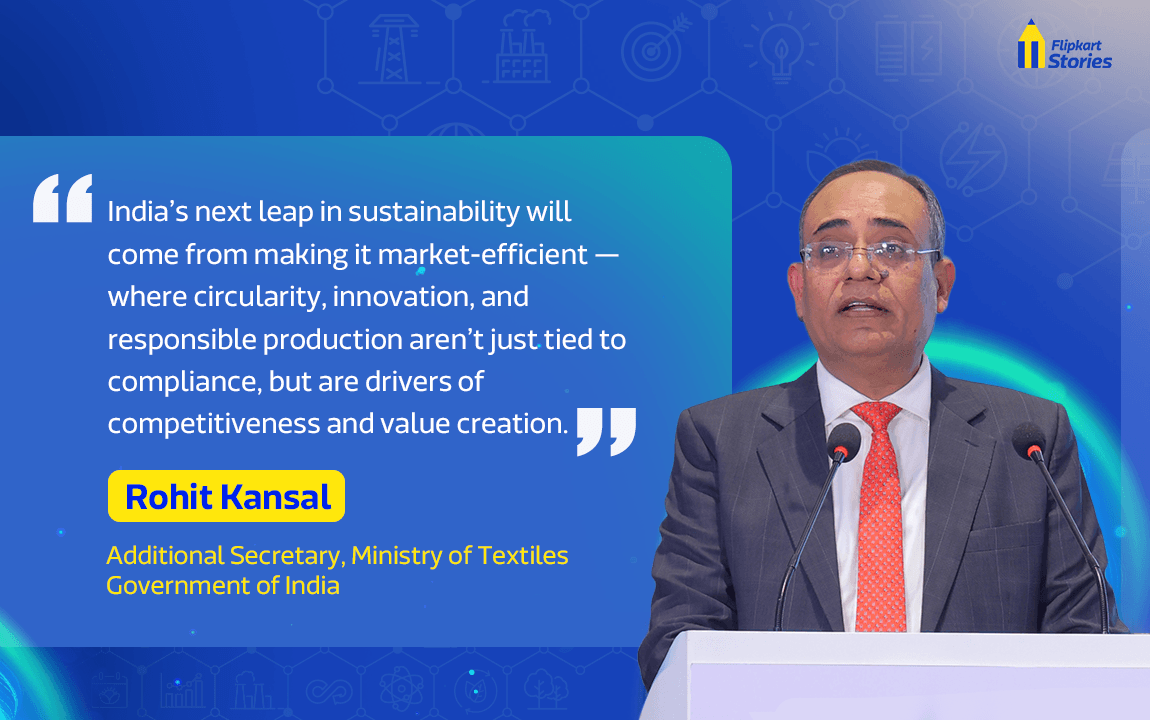
Rohit Kansal, Additional Secretary, Ministry of Textiles, Government of India, emphasized the power of holistic and collaborative approaches to sustainability and circularity in e-commerce and textiles. In his address at the Sustainability Action Summit , he stated, “India’s next leap in sustainability will come from making it market-efficient — where circularity, innovation, and responsible production aren’t just tied to compliance, but are drivers of competitiveness and value creation.”
“Panipat, Haryana, has become the world’s largest ecosystem for mechanical textile waste recycling, while Tirupur, Tamil Nadu, is now a global model for wastewater recycling with more than 90% recovery. These are powerful illustrations of how environmental stewardship and industrial competitiveness can reinforce and work symbiotically. What we have achieved is not inconsequential, but what we need to achieve is also large, and which is why we need to look at these lighthouses to become the templates that will no longer remain islands, but span an ever-increasing virtuous cycle of circularity,” Mr. Kansal further adds.
Driving Electric Mobility and Decarbonization for the Greener Future
Electric vehicles hold substantial promise for decarbonizing last-mile logistics and supply chains in the e-commerce sector. Joining the Climate Group’s EV100 commitment – transitioning 100% of its logistics fleet to electric vehicles by the year 2030 – Flipkart currently has 20,000 2-wheelers, 3-wheelers and 4-wheelers in its last mile supply chain. Earlier this month, Flipkart also launched a pilot programme in the Delhi-Jaipur corridor to assess the feasibility of EV trucks.
Recognizing the critical role EVs play in reducing carbon emissions, the speakers at the Sustainability Action Summit 2025 highlighted both the achievements and barriers on the road to broader adoption of e-mobility.
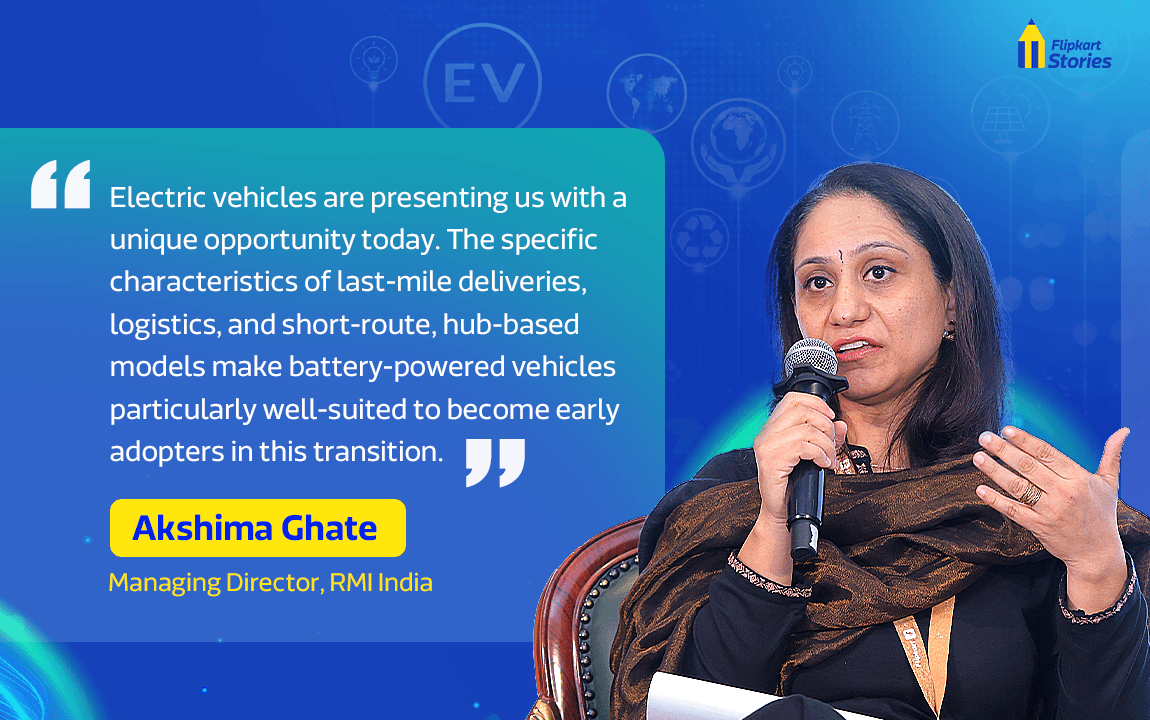
Akshima Ghate, Managing Director of RMI India, said, “EVs are a very natural starting point and one of the biggest solutions not just for the climate problem, but also for the air pollution problem because of the zero tailpipe emissions. Electric vehicles are presenting us with a unique opportunity today. The specific characteristics of last-mile deliveries, logistics, and short-route, hub-based models make battery-powered vehicles particularly well-suited to become early adopters in this transition.”
The progress of EV adoption in India has been encouraging, with around 7% penetration. However, adoption rates have been higher in urban areas, at around 12-15%. Emphasizing the need for further innovation in financing models and technology development, Akshima added, “Initially, when talking about the logistics, the consumers and MSMEs did not have the collateral for EVs. We are talking about financing a completely new technology where the financer was too cautious to lend. But I think now we are seeing innovation in terms of how you can unlock financing for the logistic sectors and how you can continue to innovate in terms of understanding scaled financing.”
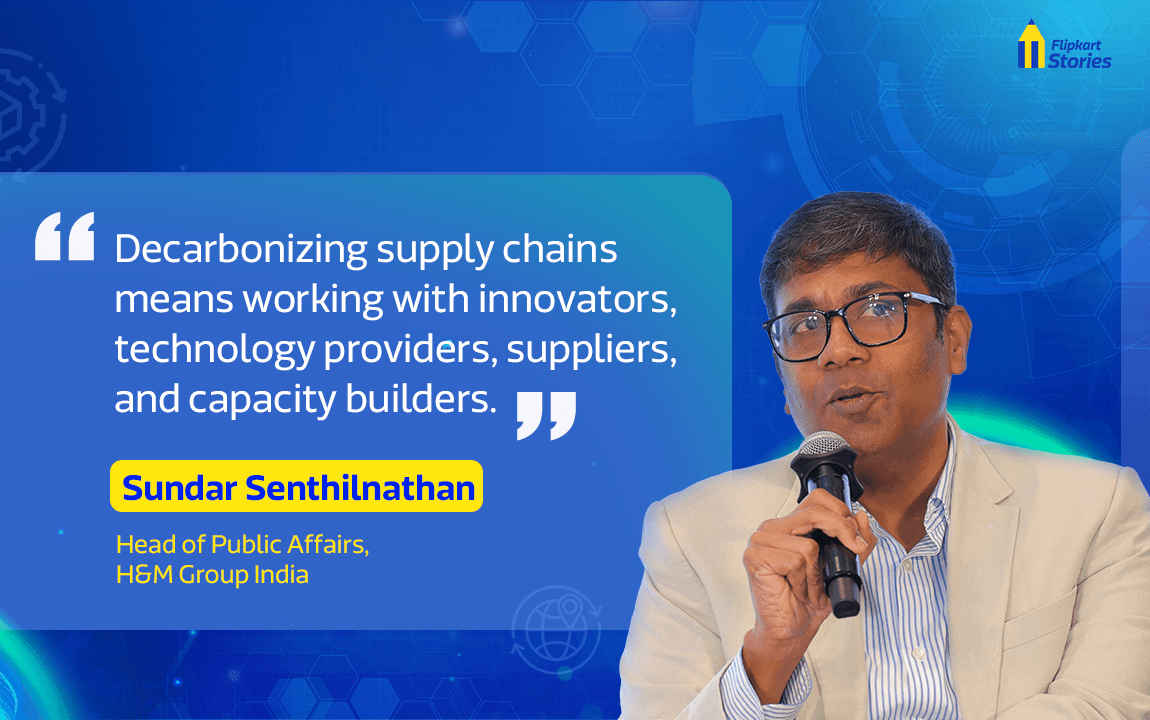
Complementing this view, Sundar Senthilnathan, Head of Public Affairs at H&M Group India, laid out the corporate perspective on decarbonization. “Decarbonizing supply chains means working with innovators, technology providers, suppliers, and capacity builders. It entails walking them through or working with them in terms of providing a carbon roadmap, and seeing how to cut emissions gradually over a period,” Sundar added.
Collaboration for Circular Value Chains: From Policy to Practice
Speakers at the summit also emphasized the significance of transforming supply chains into more circular and sustainable systems. The key focus was on how the interplay of industry and policy can embed circular value chains with collective responsibility and innovative models.
Rachna Arora, Director for Climate Change and Circular Economy at The Deutsche Gesellschaft für Internationale Zusammenarbeit (GIZ) GmbH India, highlighted the importance of effective policies like Extended Producer Responsibility (EPR) and deposit-refund schemes in advancing reverse logistics. “There are models involving aggregators, private sector players, city governments, and national or state governments working together to set frameworks and collaborate, including integrating informal assets. These initiatives require thorough market research and ongoing dialogue between public and private sectors to be effective and successful.”
Another important pillar of circularity is sustainable packaging that balances environmental impact with consumer acceptance. Shashidhar Vempala, Head of Sustainability and CSR at Hindustan Unilever, spoke about the nuances and challenges in transitioning to recyclable packaging. He pointed to the need for policy interventions, improved recycling infrastructure, and consumer education to overcome the “knowledge transition” and “mindset transition” barriers.
Innovation and Consumer Engagement to Shape Sustainable Commerce
The Flipkart Sustainability Action Summit 2025 also underscored the critical role of technology and innovation in advancing sustainable commerce. Vinod Bhat, Senior Director at HP Inc., emphasized the importance of embedding sustainability within the product lifecycle.
“Inculcating sustainability at the core of operations is about how we engineer it into the whole product life cycle. Our products across portfolios, whether PCs, printers, inks, or cartridges, are made with 100% sustainable materials, including recycled ocean plastics. We focus on responsible sourcing, responsible transportation, and energy-efficient design to reduce carbon footprint during use and after use.”
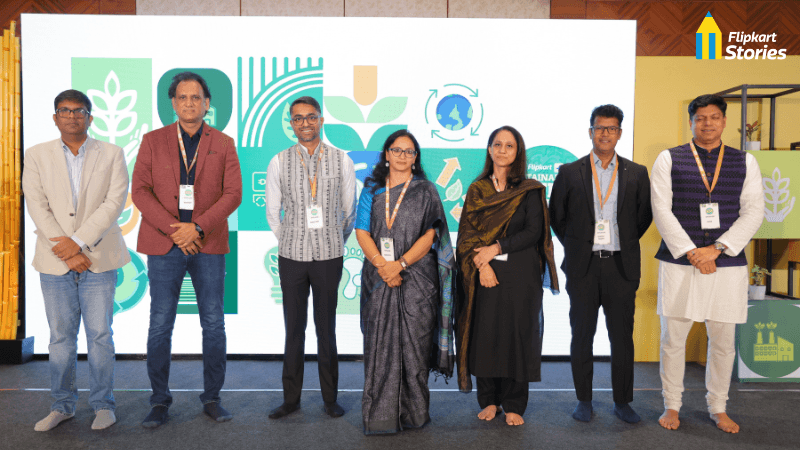
From left to right: Sundar Senthilnathan, Vinod Bhatt, Nishant Gupta, Rachna Arora, Akshima Ghate, Shashidhar Vempala, Govindraj M K
Vinod also highlighted the pivotal role e-commerce can play in shaping sustainable practices through innovative engagement strategies. “E-commerce is an excellent platform where manufacturers, suppliers, retailers, logistics partners, and consumers all come together. This creates a unique opportunity for e-commerce players to take a leading role by building collaborative platforms right from the start.
By doing so, they can drive sustainable packaging initiatives and optimize logistics operations. There are significant opportunities in e-commerce to rationalize delivery routes and collaborate with logistics partners to adopt more fuel-efficient transportation methods,” Vinod added.
A breakout session on powering circularity in textiles was moderated by Govind Raj, Chief Human Resources Officer, Myntra. The session adopted a problem-solving and action-driven format, encouraging participants to arrive at practical solutions.
Collaborative dialogue through structured round-table discussions focused on generating implementable ideas to advance textile circularity within the e-commerce ecosystem. The format prioritized expert knowledge exchange and actionable outcomes intended to influence future sustainability strategies.
The Sustainability Action Summit 2025 also featured the Startup Pitch Finale, highlighting market-ready innovations that support circularity and sustainable packaging. Introducing the session, the host reiterated that “Innovation lies at the heart of sustainability” and acknowledged the rigorous selection process designed to identify high-impact solutions aligned with Flipkart’s ecosystem.
Two standout start-ups were honored for their contributions. Go Zero C won in the post-consumer textile waste category for its circular fashion platform enabling free doorstep collection and responsible reuse.
Eco365 was recognized for its certified compostable packaging designed to reduce food loss, with its representative noting, “India loses 1 lakh crore rupees every year due to food loss… It’s wasted food, it’s wasted resources and it’s wasted efficiency”.
The session reinforced the role of start-ups as catalysts for scalable sustainability within e-commerce.
The summit concluded with two thematic breakout sessions conducted in parallel. The first session focused on circularity in textiles, covering pathways from take-back models to value recovery in e-commerce. The second explored innovations in sustainable packaging materials, including pulp-less paper, agri-fibre, and compostable plastics.
Participants engaged in focused discussions to develop practical frameworks and operational opportunities for sustainable transformation. The sessions reflected the summit’s emphasis on collaborative progress, underscored by the call to “engage openly, challenge assumptions, and co-create pathways that will define the next chapter of sustainability.”
With sustainability deeply embedded in its vision and operations, the Flipkart Group continues to lead by example, building a cleaner and more resilient future for India. In this context, the Sustainability Action Summit 2025 was a galvanizing call to the entire industry and ecosystem to embrace sustainable commerce as an imperative for long-term growth and societal well-being.


