The voice on the other end may sound like someone you know and trust. But it may not be them at all – and what you’re experiencing may be a voice scam. Today, fraudsters can create eerily realistic imitations in minutes using AI-powered voice cloning tech.
Since the voice feels so familiar, many people don’t pause to question it. They react out of instinct and end up being scammed. Being aware of these scams is your best defence.
Cues to Identify Voice Scams
The voice sounds exactly like someone you know.
But it might not actually be them.
AI tools are becoming easier to access. Scammers can now clone voices and create convincing fake calls. The voice on the other end may sound like your friend, family member, or even an official. These scams rely on panic and urgency to trick people into sending money before they stop to verify the situation.
What Is a Deepfake Voice Scam?
These scams use AI to replicate a person’s voice. Scammers gather audio clips from sources such as:
- social media posts
- voice messages
- videos or interviews
An example: A call that feels urgent
Your phone rings. It’s your brother. He sounds tense.
“I’ve been in an accident. I need money for medical bills right now.”
Your instinct is to help immediately. This call may not be from your brother at all. It could be a scammer using deepfake voice technology to imitate someone you trust.
Warning Signs to Watch Out For
Look out for these common red flags to avoid falling prey to voice scams:
- Unexpected emergency calls claiming injury, arrest, or being stranded
- Pressure to send money immediately
- Requests to keep the situation secret
- Urgent payment requests via UPI or QR codes
The Flipkart Security Promise
At Flipkart, we are committed to your safety. We work hard to secure our platform and protect your account. While we build strong backend security, it is crucial to remember that we will NEVER contact you via call, SMS, or email to ask for:
- Your account login OTP
- Your UPI PIN or
- Your credit/debit card PIN
If anyone claiming to represent Flipkart asks for these details, end the conversation immediately.
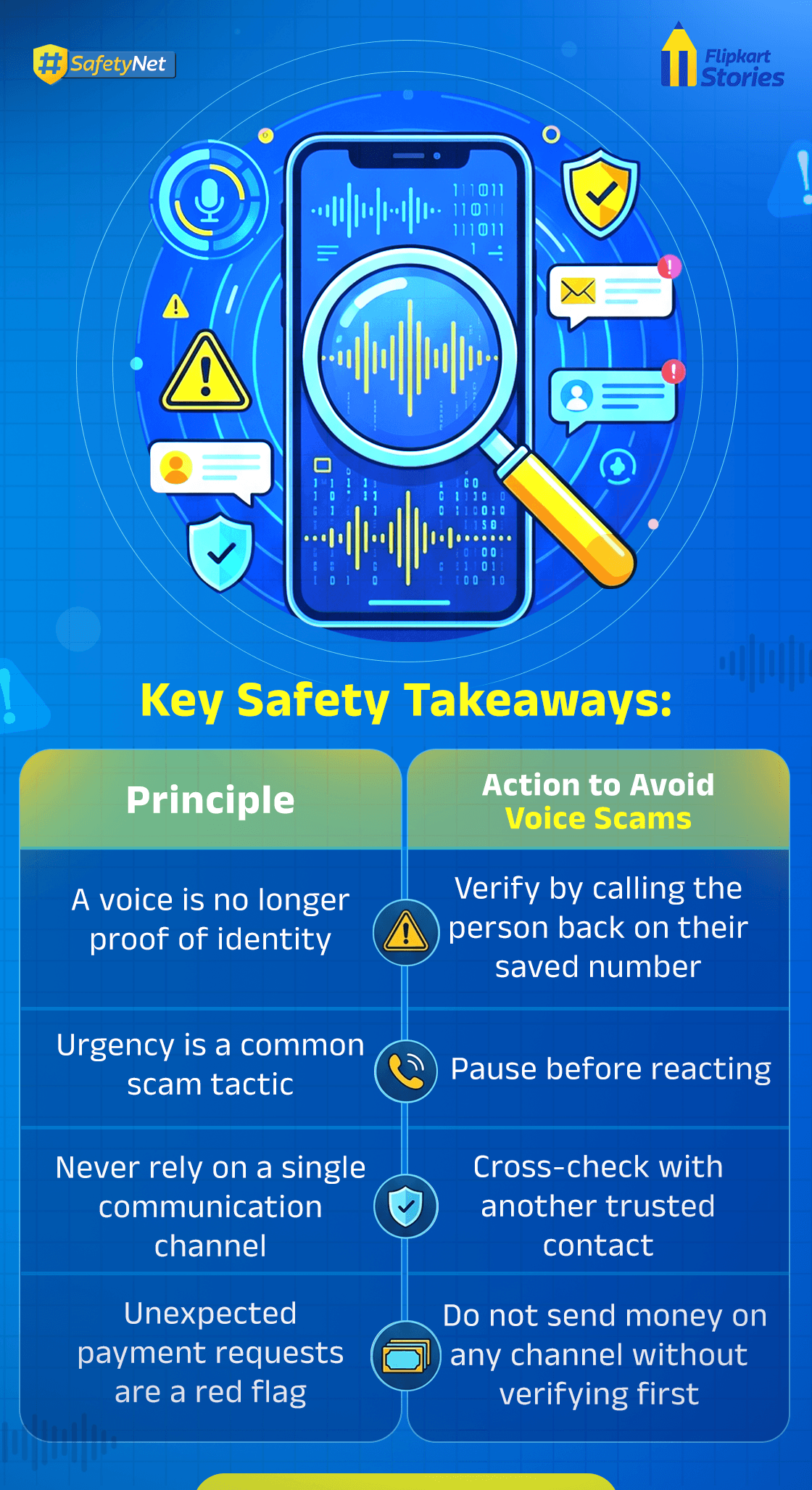
One Simple Habit Can Help You Prevent Voice Scams
When you hear a familiar voice in distress, your brain is hardwired to react emotionally. Scammers rely on this to get you to send money or reveal data before you realize something is wrong.
But they cannot stop you from verifying facts before acting.
Use this three-step defense: Pause. Hang up. Verify.
This simple habit can help protect you from voice-cloning scams.